
- Home
- Services
- Water Damage Restoration
- Structural Drying
Structural drying and moisture monitoring in Marin and the Bay Area
MM Bay Construction & Restoration dries walls, floors, ceilings and crawl spaces after water damage across Marin County and the Bay Area, 24/7. We map the moisture, set dehumidifiers and air movers, log readings every day, and keep drying until the numbers match dry materials in your own home.
- Answered 24/7
- Licensed contractor · CSLB #1071905
- We bill your insurance
- Dry-out to rebuild, one company
- 24/7, every dayPhones answered, crews sent
- Licensed & bondedCA General Building, CSLB #1071905
- Insurance billed directlyWe work with your adjuster
- We do the rebuild tooHomes, businesses, multifamily
Signs you need structural drying
- Walls or floors still damp a day after a leak
- Baseboards or door casings starting to swell
- Hardwood boards cupping or crowning
- Humidity or a musty smell after water was cleaned up
- A previous company left before readings showed the house was dry
Moisture mapping: finding water you cannot see
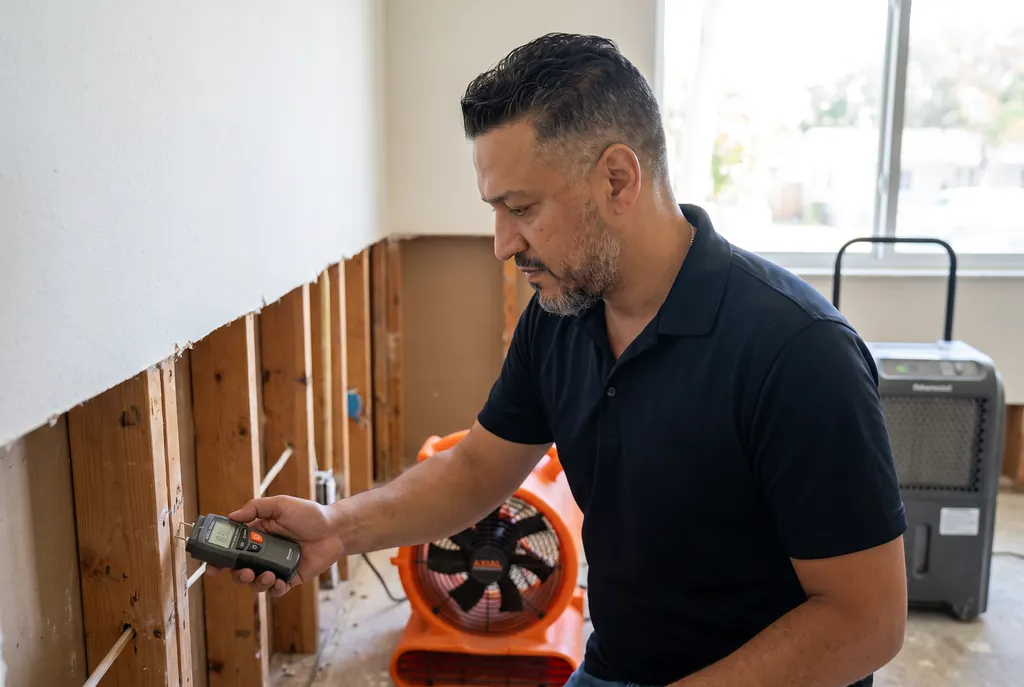
Drying starts with knowing exactly where the water is. A thermal camera shows temperature differences across walls, ceilings and floors. Wet materials are usually cooler, because evaporation pulls heat out of them, so damp areas stand out. But a cool spot can also be a cold exterior wall or a duct, so every suspect area is confirmed with a moisture meter: pin meters for wood and drywall, and pinless meters that read through hardwood, tile and cabinets without leaving holes.
We sketch the affected area and mark readings on it, room by room. We check behind and under cabinets, along toe-kicks, into closets, into the rooms on the other side of each wet wall, and the floor or ceiling below. Then we take readings on the same kinds of materials in parts of your home the water never reached. That gives us the dry standard: the actual target each wet material has to reach. It is different in every house, which is why a fixed number of days is never the goal.
Flood cuts, drilling, and what we save
Not every wet wall has to come out. When the water was clean, we started quickly, and there is no soaked insulation behind the drywall, we can often dry a wall in place. We remove the baseboard, drill small holes near the bottom of the wall where the baseboard will cover them, and push dry air into the cavity.
Other walls need a flood cut: we cut the drywall in a straight line, typically a foot or two above the wet line, and remove the bottom section so the cavity can dry and wet insulation can come out. Flood cuts are the right call when the wall cavity holds wet insulation, when the water was gray or black, when vinyl wallpaper or many layers of paint trap moisture in the board, or when the drywall has lost strength.
Older homes add options. Plaster on wood lath, common in San Francisco and older Marin and East Bay homes, handles water better than drywall and can often be dried in place. Particleboard cabinet bases and floating laminate floors usually cannot.
What the drying equipment is doing
Drying is controlled evaporation. Air movers blow across wet surfaces so moisture leaves the material and enters the air. Dehumidifiers then pull that moisture out of the air before it can soak back into something else. Low-grain refrigerant dehumidifiers handle most homes. Desiccant dehumidifiers work better in cold spaces like a crawl space in January. Hardwood floors get drying mats that pull water up through the boards, and walls can get injection systems that dry the cavity through small holes.
Fans alone can make things worse, raising indoor humidity and spreading moisture into dry rooms. So we measure the air as well as the materials: temperature, relative humidity and the amount of water in the air, inside the drying area and outside it. A crew member checks every day, records the readings, and moves, adds or removes equipment based on them. The equipment is noisy and runs around the clock, and it works best with windows and doors closed. Our process page shows how drying fits into the full job.
What we do, step by step
Inspect and map
Thermal imaging and moisture meters show every wet wall, floor and ceiling.
Set a drying goal
Readings on unaffected materials in your home set the dry standard.
Open up where needed
Flood cuts, baseboard removal and drilled vents give trapped water a way out.
Place equipment
Dehumidifiers, air movers and specialty mats are sized to the rooms and materials.
Monitor daily
Material and air readings are logged every day and equipment is adjusted.
Verify and document
Final readings are photographed before equipment is removed and repairs begin.
After the cleanup, we put it back
Drying is where restoration and construction meet. Close a wall too early and the moisture trapped inside can lead to mold, peeling paint and popped nails a few months later. MM Bay does not hang drywall or lay flooring until our own readings say the materials are dry, because our name is on the finished room as well as the drying log. There is no pressure to declare a house dry so another company can start, and no gap between the last reading and the first day of repairs.
Repairs & reconstruction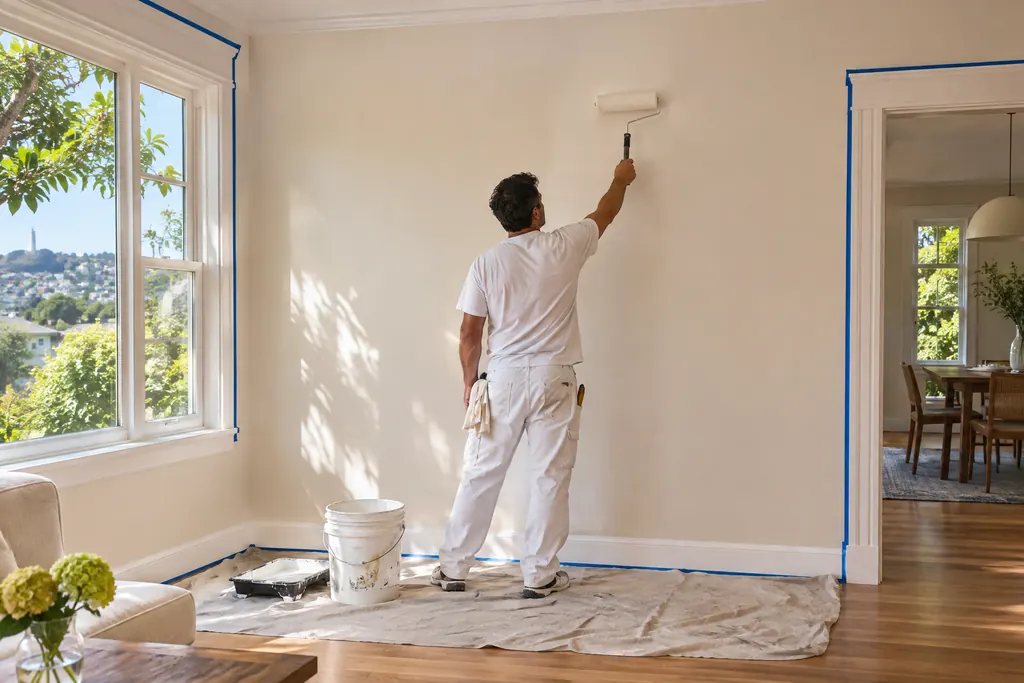
How insurance usually handles this
Adjusters look for proof that drying was necessary and that it worked. Our drying log gives them both: the starting moisture map, the dry standard we measured, daily readings for each wall and floor, and the equipment used each day. Insurers commonly question equipment that stays longer than the readings justify, so we remove units as each area reaches its goal. The log is part of the package we send your adjuster, and we can bill the drying directly to your insurance company.
How long does it take for walls to dry after a leak?
With professional equipment, most drywall walls dry in about three to five days once the baseboards are off and the cavity is vented or opened. Plaster, wet insulation, multiple layers of drywall or cold weather can add days. We go by daily moisture readings compared to dry walls in your home, not by the calendar.
Can wet drywall be dried, or does it have to be replaced?
It can often be dried when it was wet with clean water for a short time, has not lost strength, and has no soaked insulation behind it. Drywall that is soft, crumbling, or touched by gray or black water is replaced. We decide wall by wall with moisture readings and explain each call.
Why can't I just open the windows and run fans?
Bay Area winter air is often damp, so opening windows can add moisture instead of removing it. Household fans also move surface moisture around without reaching the inside of walls and floors, and they can push humidity into dry rooms. Dehumidifiers remove the water from the air, and readings confirm it is actually leaving the materials.
How do you know when the house is dry?
When the readings in every affected material match the dry standard, the readings we took on the same materials in unaffected parts of your home. We photograph the final readings for your records and your adjuster, then remove the equipment and start the repairs.
Often needed together
Emergency Water Removal
Pump-out and extraction of standing water, day or night, with drying started on the first visit.
Flooded Basement & Crawl Space
Pump-out, cleanup and drying for flooded basements, lower levels and crawl spaces under raised foundations.
Mold Inspection & Testing
Moisture-focused mold inspections, with independent lab testing coordinated when it answers a real question.
More water damage services
Water where it shouldn’t be? We’re ready now.
Call any time, day or night. We’ll tell you what to do right away and send a crew.