
- Home
- Services
- Repairs & Reconstruction
- Drywall & Ceiling Repair
Drywall and ceiling repair after water damage in Marin and the Bay Area
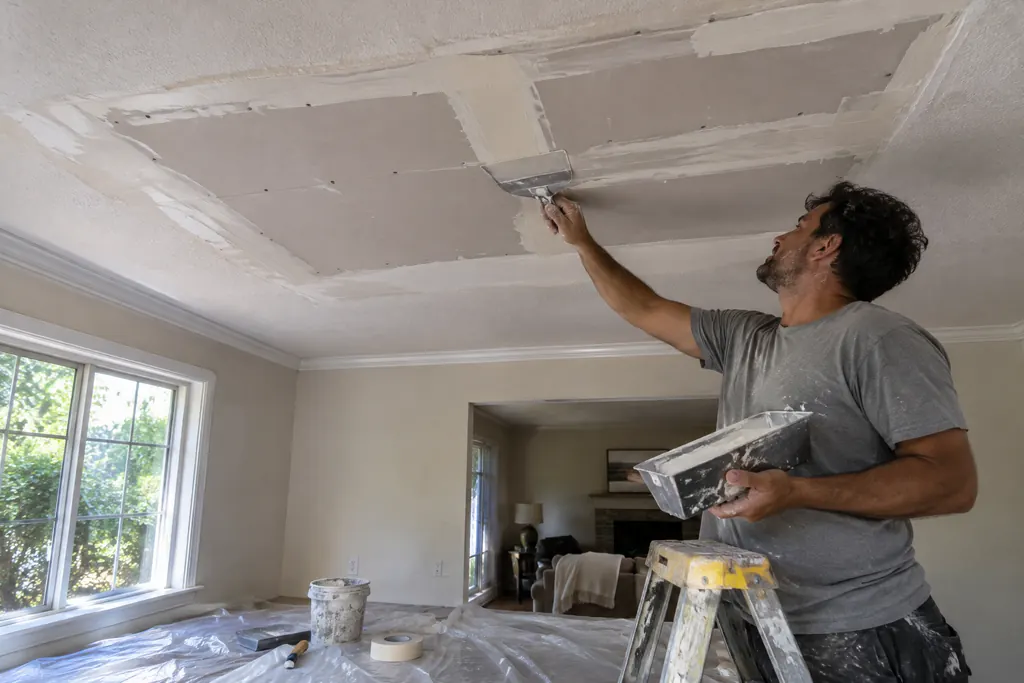
MM Bay Construction & Restoration replaces water-damaged drywall, ceilings and insulation across Marin County and the Bay Area, and matches the texture so the repair disappears. We answer 24/7, and the same team that cut out the wet drywall hangs, finishes and paints the new.
- Answered 24/7
- Licensed contractor · CSLB #1071905
- We bill your insurance
- Dry-out to rebuild, one company
- 24/7, every dayPhones answered, crews sent
- Licensed & bondedCA General Building, CSLB #1071905
- Insurance billed directlyWe work with your adjuster
- We do the rebuild tooHomes, businesses, multifamily
Signs you need drywall & ceiling repair
- Open walls or ceilings left after drying
- Drywall that is soft, crumbling or stained after a leak
- Bubbling paint, or tape lifting at the seams
- A patch from an old repair that never matched
- Wet or compressed insulation in walls or the attic
Matching popcorn, knockdown, orange peel and smooth walls
Hanging drywall is the easy part. Matching the finish is the craft. Orange peel and knockdown textures are sprayed with a hopper gun, and the result depends on the mud's thickness, the air pressure and the tip size. Knockdown adds timing: the splatter is flattened with a wide knife at just the right moment. We test on scrap board until the pattern matches yours, then feather the new texture into the existing surface.
Smooth walls are the least forgiving. A smooth finish needs a skim coat over the entire repaired surface, sometimes called a Level 5 finish, or light catches every seam. Popcorn ceilings, common in homes built through the 1970s and into the 1980s, can be patched with matching acoustic texture. Because older popcorn and some joint compounds can contain asbestos, the texture should be sampled and tested by a lab before it is disturbed. Every repair ends with paint on the full wall or ceiling, corner to corner, so the patch does not show as a slightly different sheen.
Plaster walls in older Bay Area homes
Many homes built before the 1940s in San Francisco, Oakland, Berkeley and older Marin towns have plaster walls and ceilings over wood lath instead of drywall. Plaster tolerates water better than drywall and can often be dried in place. The problem comes when the plaster's grip on the lath, the keys that push through the gaps, breaks. Then the plaster sags or comes loose.
Small areas can be reattached and patched with plaster. Larger areas are usually replaced with drywall, which is thinner than old plaster, so we shim the framing or layer the board to bring the new surface flush with the original wall. Otherwise you would see a step at every edge. Crown moldings, picture rails and other trim attached to plaster walls are removed carefully and reinstalled. Homes built before 1978 may also have lead-based paint, and federal rules require lead-safe work practices when renovation disturbs it, which we plan for before any plaster comes down.
Insulation, fire-rated walls and what goes behind the drywall
Behind the wall, wet insulation is replaced, never dried and reused. Fiberglass batts in walls are replaced with batts of the same thickness, and wet blown-in insulation in an attic over a leak is removed and replaced to the original depth. Between units in multifamily buildings, we replace sound insulation so noise between neighbors stays where it was.
The board itself is matched to the location. Building code calls for specific fire-resistant drywall between an attached garage and the living space, and on ceilings under rooms above a garage, so we replace that assembly in kind. Bathrooms get moisture-resistant board, and shower walls get cement board or a waterproofed backer instead of drywall. Fire-rated walls in apartment buildings and condos are rebuilt to their original rating. These details are invisible when the job is done, but they are what makes the repair correct and not just good-looking. Our painting and finish carpentry work finishes the job once the walls are closed.
What we do, step by step
Confirm dry framing
Studs, joists and plates are checked with moisture readings before anything is closed up.
Replace insulation
New insulation to match what was removed, including sound and attic insulation.
Hang drywall
The right board for each location: standard, fire-rated or moisture-resistant.
Tape and finish
Joints are taped and finished to blend into the existing wall.
Match texture
Orange peel, knockdown, popcorn or smooth, tested and feathered into the original.
Prime and paint
Stain-blocking primer where needed, then paint on the full wall or ceiling.
After the cleanup, we put it back
The cleaner the cut, the better the patch. When MM Bay removes wet drywall during mitigation, we cut along straight lines at a consistent height and stop at framing where we can, because we already know we will be the ones patching it. That saves time, avoids a wavy repair line, and keeps the job from turning into a whole-room replacement when one wall would do. Then the same crew hangs, finishes, textures and paints it.
Repairs & reconstruction
How insurance usually handles this
Drywall repair is usually the most straightforward part of a water claim, but two items are often missing from the first estimate: matching the texture, and painting the full wall or ceiling instead of just the patch. Without them, the repair stays visible. We include both in our scope with photos showing why, along with any insulation replacement, and send it to your adjuster. If testing finds asbestos in a ceiling texture, the abatement becomes its own line item.
Drywall & Ceiling Repair: questions we hear
Still have a question? Call (415) 878-3410. We pick up 24/7.
Can you match the texture on my walls after a repair?
We can match orange peel, knockdown, popcorn and smooth finishes, along with hand-applied textures in older homes. We test on scrap board until the pattern matches, then feather the new texture into the existing wall and paint the full surface so the sheen is even. Very old or unusual textures take more trial runs, but they can be matched closely.
How much drywall needs to be removed after a leak?
Only what moisture readings or contamination require. For clean water, that often means a flood cut a foot or two above the wet line, or no removal at all if the wall can be dried in place. Gray or black water, wet insulation and crumbling board call for more. We decide wall by wall and show you the readings.
Does my popcorn ceiling have asbestos?
You cannot tell by looking. Popcorn and other textured ceilings applied before the 1980s may contain asbestos. A small sample is taken and tested by a lab before the ceiling is cut, scraped or patched. If the result is positive, a licensed abatement contractor removes the affected section first, then we repair it.
Do I need to replace insulation after a leak?
In most cases. Wet fiberglass and cellulose insulation hold moisture against the framing, compress and lose much of their insulating value, and insulation touched by dirty water is contaminated. We remove it, dry the cavity, and install new insulation of the same type and thickness before the drywall goes back.
Often needed together
Ceiling & Roof Leak Damage
Sagging or stained ceilings from roof leaks and upstairs bathrooms, dried, repaired and fixed at the source.
Painting & Finish Carpentry
Paint, baseboards, casings, doors and built-ins matched to your home so the repair cannot be found.
Water Damage Repair
The full rebuild after a leak or flood: drywall, floors, cabinets, paint and trim, under one licensed contractor.
More reconstruction services
Water where it shouldn’t be? We’re ready now.
Call any time, day or night. We’ll tell you what to do right away and send a crew.