
- Home
- Services
- Repairs & Reconstruction
- Water Damage Repair
Water damage repair: we put your home back together
MM Bay Construction & Restoration rebuilds homes after water damage across Marin County and the Bay Area, from new drywall and paint to floors, cabinets and full rooms. We answer 24/7, and when we also handle the drying, the repairs start as soon as the readings say the structure is dry.
- Answered 24/7
- Licensed contractor · CSLB #1071905
- We bill your insurance
- Dry-out to rebuild, one company
- 24/7, every dayPhones answered, crews sent
- Licensed & bondedCA General Building, CSLB #1071905
- Insurance billed directlyWe work with your adjuster
- We do the rebuild tooHomes, businesses, multifamily
Signs you need water damage repair
- The drying equipment is gone and the walls and floors are still open
- Your adjuster approved repairs and you need a contractor to build them
- The company that dried your home does not do reconstruction
- Repairs from an earlier leak never matched or were never finished
- A water loss in a condo, rental or multi-unit building that needs coordinated repairs
From a dried-out shell to a finished room
When drying ends, a typical room is missing the bottom two feet of drywall, its baseboards, its insulation, part or all of its flooring, and sometimes a cabinet run. Putting it back is a sequence of trades that each depend on the one before. We confirm the framing and subfloor are dry with our own readings. We repair any framing or subfloor that was damaged, and finish any plumbing or electrical work in the open walls, with inspections where a permit is required.
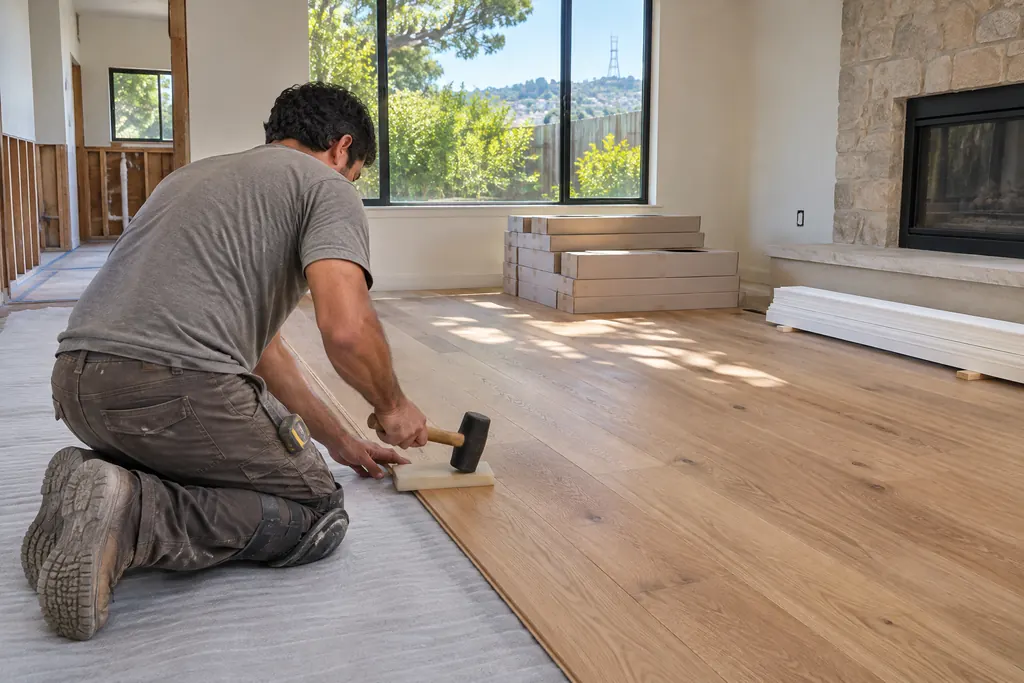
Then the room closes up: insulation, drywall, tape and texture, primer and paint. Flooring goes in after the dusty work is done. Baseboards, door casings and trim go on over the new floor. Cabinets, countertops, fixtures and appliances are reinstalled and tested. The job ends with a walkthrough where you point out anything that is not right, and a final clean. With MM Bay, the same company and the same point of contact runs every one of those steps, so there is no gap between trades waiting for someone else to show up.
How the repair estimate and the insurance scope fit together
Your adjuster writes an estimate of what the insurance company believes the repair costs. We write our own line-item scope from measurements we took during demolition and drying. Then we compare the two line by line. Most differences are not about prices. They are items that were missed: baseboards in the next room that had to come off, primer over water stains, painting the full wall instead of the patch, removing and resetting a toilet or vanity, or texture matching.
When we find a missing item, we send the adjuster photos and measurements that show why it is needed. When opening a wall reveals damage nobody could see before, like a rotted sill plate or a second leak, we stop, photograph it and send a supplement request before continuing. Coverage decisions are made by your insurer, and we stay in our lane as your contractor: we document the work clearly enough that the decisions are easy to make and quick to approve.
Repairs in condos, flats and shared buildings
In a multi-unit building, a single leak often damages two or three homes, and each one may be covered by a different policy. The HOA's master policy usually covers common elements and sometimes original interior finishes. Each owner's unit policy covers their own improvements and belongings, and a tenant's renter policy covers their contents. Who repairs which wall depends on the building's CC&Rs.
We document each unit's damage separately, with its own photos, readings and scope, so each policy can be handled on its own. We schedule access with owners, tenants and building management, protect hallways, stairs and lobbies during the work, and keep finishes consistent from unit to unit. San Francisco flats add their own patterns: a leak in a top-floor bathroom can travel down through two ceilings below, and older buildings often have plaster ceilings and original trim worth matching. For building owners and managers, our commercial and multifamily page covers how we work on larger properties.
What we do, step by step
Confirm dry
We take our own moisture readings on framing and subfloor before anything is closed up.
Scope and estimate
A line-item scope from real measurements, compared with your adjuster's estimate.
Permits and structure
Framing, subfloor, plumbing and electrical repairs, with permits and inspections when required.
Close walls and ceilings
Insulation, drywall, tape, matched texture, primer and paint.
Finish
Flooring, trim, doors, cabinets, countertops and fixtures, installed in the right order.
Walkthrough
We go through every room with you, fix anything on the list and do a final clean.
After the cleanup, we put it back
This page is the reason MM Bay exists. Most of the stress after a leak comes after the drying equipment leaves, when a homeowner is left with open walls and a list of trades to hire. We do the emergency work and the reconstruction under one CSLB license, with one point of contact who knows what was removed and why. The measurements we took during demolition become the repair scope, so nothing is guessed and nothing is torn out twice.
Repairs & reconstruction
How insurance usually handles this
Your policy's dwelling coverage pays to repair the structure to its condition before the loss, using materials of like kind and quality. Many replacement cost policies pay part of the claim up front and release the rest, the recoverable depreciation, once repairs are complete. We provide the completion paperwork and final invoice the insurer asks for at that stage. Your deductible is your share of the repair and is subtracted from what the insurer pays.
Water Damage Repair: questions we hear
Still have a question? Call (415) 878-3410. We pick up 24/7.
How long does water damage repair take?
Drywall, texture and paint in one or two rooms is often finished in one to two weeks after the structure is dry. Replacing flooring, cabinets or countertops adds time, mostly for material lead times and inspections. Larger losses run several weeks or more. We give you a written schedule at the start and update it if anything changes.
What happens if more damage is found during repairs?
We stop work in that area, photograph the damage and explain it to you. For an insurance job, we send a supplement request with photos and measurements to your adjuster before continuing. Common finds are rot at a sill plate, a second leak or old wiring. Nothing outside the approved scope gets built without your go-ahead.
Can you repair water damage that another company dried out?
We can. We take our own moisture readings first, because closing up a wall that is still damp causes problems later. We review the drying records you received, write a rebuild scope from our measurements, and work with your adjuster from there.
Do I need to move out during water damage repairs?
Usually not for repairs limited to a few rooms. We seal off work areas with plastic and keep dust under control. Moving out makes sense when the kitchen or the only bathroom is out of service, when floors are being replaced throughout, or for larger rebuilds. Additional living expense coverage often helps with that cost.
Often needed together
Drywall & Ceiling Repair
New drywall and ceilings with matched popcorn, knockdown, orange peel or smooth finish, plus insulation.
Flooring Replacement
Hardwood, tile, carpet and vinyl plank replaced or repaired, with subfloor checks and careful matching.
Structural Drying
Moisture mapping, dehumidifiers and daily readings until walls, floors and framing are verified dry.
More reconstruction services
Water where it shouldn’t be? We’re ready now.
Call any time, day or night. We’ll tell you what to do right away and send a crew.