
- Home
- Services
- Fire & Smoke Damage
- Smoke, Soot & Odor Removal
Smoke damage, soot cleanup and odor removal in the Bay Area
MM Bay Construction & Restoration cleans smoke and soot and removes the odor from homes and businesses across Marin County and the Bay Area, after a house fire, a kitchen fire or wildfire smoke. We answer 24/7, and we repaint and rebuild whatever cleaning alone cannot restore.
- Answered 24/7
- Licensed contractor · CSLB #1071905
- We bill your insurance
- Dry-out to rebuild, one company
- 24/7, every dayPhones answered, crews sent
- Licensed & bondedCA General Building, CSLB #1071905
- Insurance billed directlyWe work with your adjuster
- We do the rebuild tooHomes, businesses, multifamily
Signs you need smoke, soot & odor removal
- Black webs or a dark film on ceilings and in corners
- Yellow or brown sticky residue after a kitchen fire
- Smoke smell in closets, carpets or coming from the vents
- Ash on windowsills or a campfire smell after wildfire smoke
- Odor that returns on warm or humid days
Not all soot cleans the same way
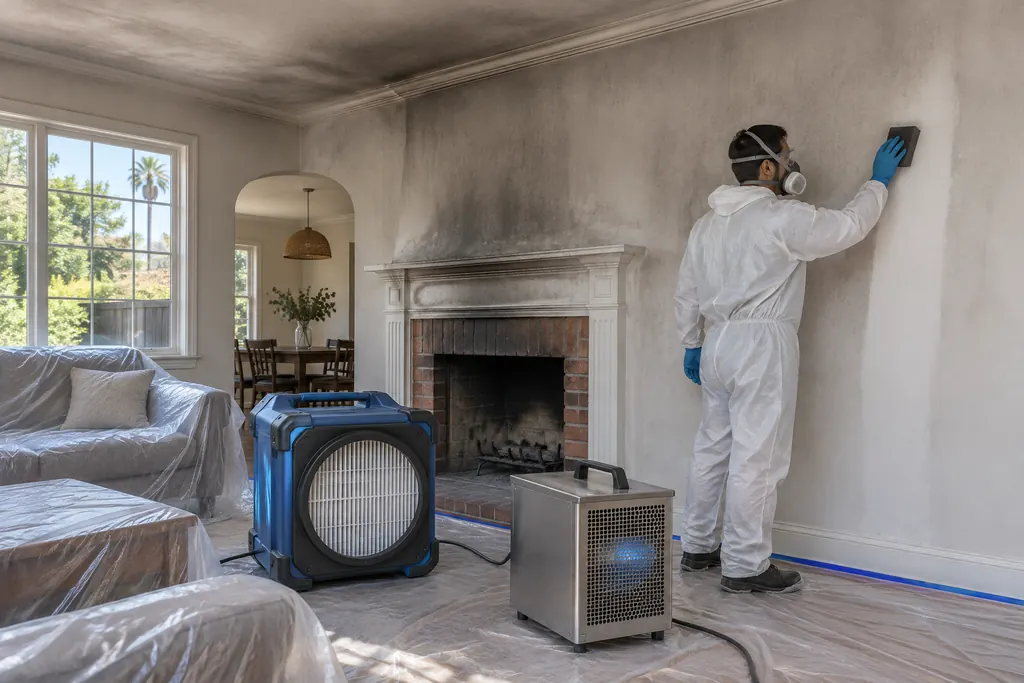
What burned decides what kind of residue you have, and the wrong cleaning method can make it worse. Fast, hot fires burning wood and paper leave dry, powdery soot. Wiping it with a wet rag smears it into the paint, so it is removed first with dry chemical sponges and HEPA vacuums. Slow, smoldering fires and burning plastics, foam and rubber leave wet, oily soot that smears and needs degreasing cleaners.
Kitchen fires that burn food leave protein residue. It is nearly invisible, a faint yellow or brown film, and it carries a strong, lingering odor that surprises people because the kitchen looks clean. Wildfire smoke brings fine ash and particles in through vents, attic openings and gaps around doors and windows. The dark webs in ceiling corners after a fire are usually soot clinging to old spider webs, and they are removed carefully so they do not streak. We test-clean a small area in each room before choosing a method, then clean from the ceiling down.
How smoke odor is actually removed
Air fresheners and candles only cover smoke odor for a while. Real odor removal follows an order. First, the source comes out: charred materials, soaked insulation and anything that cannot be cleaned. Second, every surface is cleaned, because soot left behind keeps releasing odor. Only then does deodorizing work.
Deodorizing uses a few tools, matched to the job. Thermal fogging sends a deodorizer into the same small openings in porous surfaces that the smoke got into. Hydroxyl generators break down odor molecules in the air over a longer period. Ozone generators work quickly but are used only in an empty building, with people, pets and plants out until the space has aired out afterward. The heating and air system is cleaned and its filter replaced, or it will push smoke smell back into every room. Exposed framing and subfloor that held odor are sealed with an odor-blocking primer before walls close up. Then the house gets fresh paint, which is part of the odor treatment, not just cosmetics.
Wildfire smoke in the house
During fire season, smoke from distant wildfires can drift over the Bay Area for days, and some of it ends up inside. Fine ash settles on windowsills, floors and furniture. Particles collect in HVAC filters and ducts, in attic insulation near vents, and in carpets, curtains and upholstery. The result can be a smoky smell that does not fade after the air outside clears, or a gritty film on surfaces.
Cleaning wildfire smoke is mostly about removing fine particles without spreading them. We HEPA vacuum floors, upholstery and attic surfaces near vents, wipe down hard surfaces with cleaners suited to ash, clean or replace HVAC filters and ducts, and arrange laundering or dry cleaning for curtains and soft goods. Attic insulation is checked for ash. Then we deodorize where odor remains. We document residue in each room before cleaning, and our contents pack-out service handles belongings that need to be cleaned off-site.
What we do, step by step
Assess and test-clean
We identify the type of residue in each room and test cleaning methods.
Protect and remove
Unaffected areas are protected; charred and unsalvageable materials come out.
Clean from the top down
Ceilings, walls, fixtures and floors are cleaned with methods matched to the soot.
Clean the HVAC
Ducts and registers are cleaned and filters replaced so the system stops spreading odor.
Deodorize
Thermal fogging, hydroxyl or ozone treatment, chosen for the space and occupancy.
Seal and repaint
Odor-blocking primer on affected surfaces and framing, then finish paint.
After the cleanup, we put it back
Cleaning only goes so far. Charred framing has to be cleaned and sealed, some drywall and insulation will not give up the odor and has to be replaced, and most smoke jobs end with a full repaint using an odor-sealing primer. MM Bay does that construction work too, so the decision to clean or replace each surface is made by the people who will rebuild it. That avoids the common problem of a house that was cleaned, closed up and still smells like smoke on the first warm day.
Repairs & reconstruction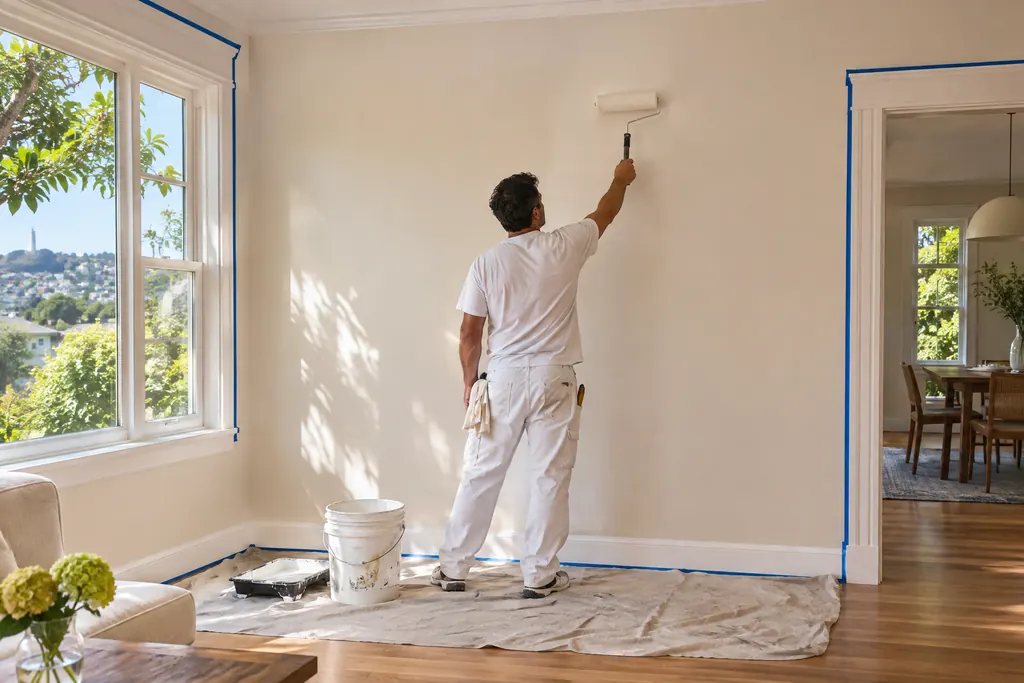
How insurance usually handles this
Smoke damage is commonly covered under homeowners and business policies, including smoke from a fire that started somewhere else. Adjusters usually want to see the residue before it is cleaned, so we photograph each room, note the type of soot and record which items and surfaces were cleaned, sealed or replaced. Odor is harder to document than a burned wall, so we describe where it persists and what we did about it. We can bill your insurance company directly.
Smoke, Soot & Odor Removal: questions we hear
Still have a question? Call (415) 878-3410. We pick up 24/7.
How do you get smoke smell out of a house?
By removing the source first, then cleaning, then deodorizing. Charred and unsalvageable materials come out, every surface with soot is cleaned, and the HVAC system is cleaned so it stops recirculating odor. Then thermal fogging, hydroxyl or ozone treatment breaks down what remains, and affected surfaces are sealed with odor-blocking primer and repainted.
Can I clean soot off my walls myself?
A very light film from a candle or a small stovetop flare-up can sometimes be cleaned with a dry soot sponge. For anything more, wiping with water or a household cleaner tends to smear soot into the paint and make it permanent. Larger areas, oily soot and protein residue from kitchen fires are best cleaned with professional methods.
Is ozone safe for removing smoke odor?
Ozone is effective on smoke odor but is used only in unoccupied spaces. People, pets and plants stay out during treatment and until the area has been ventilated afterward. In homes where people need to stay, we often use hydroxyl generators or thermal fogging instead. We explain which method we plan to use and why before we start.
Does insurance cover wildfire smoke damage?
Smoke damage from a wildfire is commonly covered under homeowners policies even when the fire never reached your property, but terms differ by policy. Adjusters usually want evidence of residue and odor before cleaning. We photograph ash and soot in each room and document the cleaning done, which gives your adjuster what they need.
Often needed together
Contents Pack-Out & Storage
Packing, cleaning and storing your belongings with a photo inventory, so the rebuild can happen around them.
Painting & Finish Carpentry
Paint, baseboards, casings, doors and built-ins matched to your home so the repair cannot be found.
Emergency Board-Up & Tarping
Plywood board-up and roof tarps after storms, fallen trees, fires and break-ins, any hour.
Water where it shouldn’t be? We’re ready now.
Call any time, day or night. We’ll tell you what to do right away and send a crew.