
- Home
- Services
- Water Damage Restoration
- Appliance & Water Heater Leaks
Water heater, dishwasher and washing machine leak cleanup in the Bay Area
MM Bay Construction & Restoration cleans up and dries water damage from failed water heaters, dishwashers, washing machines and refrigerator lines across Marin County and the Bay Area, 24/7. We also replace the failed line or install the new water heater, then repair the floors and cabinets.
- Answered 24/7
- Licensed contractor · CSLB #1071905
- We bill your insurance
- Dry-out to rebuild, one company
- 24/7, every dayPhones answered, crews sent
- Licensed & bondedCA General Building, CSLB #1071905
- Insurance billed directlyWe work with your adjuster
- We do the rebuild tooHomes, businesses, multifamily
Signs you need appliance & water heater leaks
- Water around the base of the water heater, or a rusty tank
- A puddle at the dishwasher toe-kick or under the sink
- Water spreading from the laundry room after a wash cycle
- A slow drip behind the refrigerator, or soft flooring in front of it
- Swollen cabinet bottoms, or lifted vinyl or laminate flooring
Appliance leaks hide under things
Each appliance leaks into a spot designed to be out of sight. A dishwasher leak runs under the machine, into the cabinet bases on either side and down into the subfloor, often for weeks before the toe-kick swells. A refrigerator ice-maker line, usually thin plastic or copper tubing, can drip behind the fridge and under the flooring with no puddle at all. Washing machine fill hoses tend to burst under pressure instead of dripping, and in many newer homes the laundry is upstairs, over a living room or kitchen.
That is why we pull the appliance out on every job. We check under and behind it, meter the cabinets on both sides and the wall behind, and check the ceiling below if there is one. A dishwasher leak in a kitchen over a crawl space usually means checking the subfloor and joists from underneath as well. Finding the full extent of the water on the first visit keeps the claim, and the repair, from growing later.
When a water heater fails
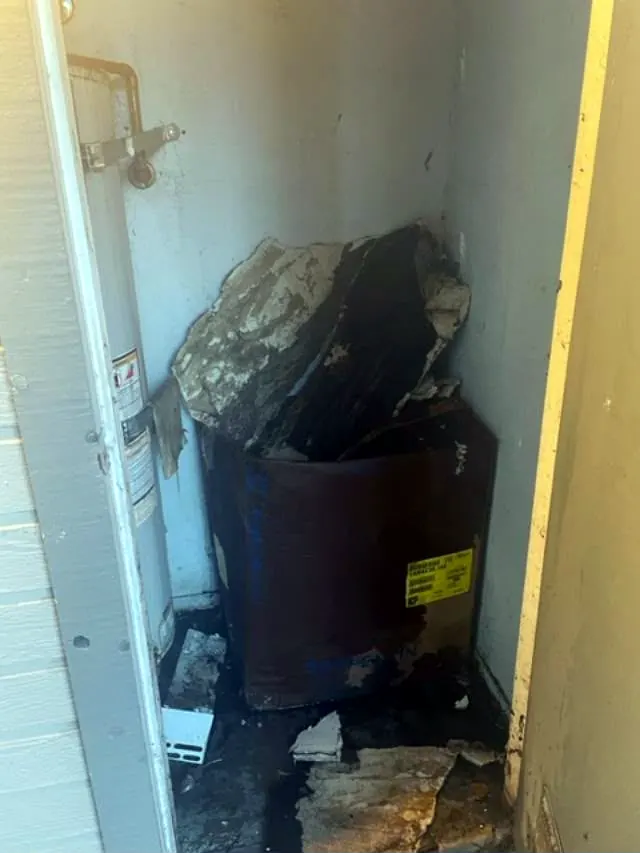
Tank water heaters usually fail by rusting through after years of sediment and corrosion, and a failing tank can release its full contents, often 40 or 50 gallons, and then keep filling from the supply line until someone shuts it off. A relief valve that keeps discharging, or a leaking supply connection, can cause slower damage. Where the heater sits decides what gets wet: a hall closet floods flooring and walls in nearby rooms, a garage soaks drywall and stored boxes, and a heater under the house wets the crawl space.
We shut off the water supply and the gas or power to the heater, drain what is left, extract and start drying. The replacement is part of the job. In California, water heaters must be braced or strapped against earthquakes, and replacement typically requires a permit. We install the new heater with seismic straps, a proper relief valve discharge line, and a drain pan where the location calls for one, so a future leak goes somewhere safe.
Replacing the failed part with one that lasts longer
Fixing the source means more than reconnecting the same type of part that failed. Rubber washing machine hoses get replaced with braided stainless steel. Plastic ice-maker tubing gets replaced with a braided line, connected to its own shutoff valve in a recessed box behind the fridge. Dishwasher supply and drain connections are checked, the machine is leveled and secured to the counter, and the supply valve under the sink is replaced if it is old or seized.
For upstairs laundry rooms, a washer pan with a drain line catches small leaks before they reach the ceiling below. Water heaters in closets or over finished space get a pan and drain line too. We can also install leak sensors, and automatic shutoff valves that close the main line when a sensor gets wet. None of these upgrades are expensive compared to the damage, and the best time to add them is while the floor and cabinets are already open. They also help the next time you file a claim, since you can show the risk was corrected.
What we do, step by step
Shut off water and power
We stop the supply and turn off power or gas to the failed appliance.
Pull the appliance
The unit comes out so we can find water underneath, behind and below it.
Extract and remove
Standing water is extracted and wet flooring, kick plates and soaked materials come out.
Dry cabinets and subfloor
Cabinet bases, walls and subfloor are dried and verified with readings.
Replace the failed part
New hoses, lines, valves or water heater, installed to code with straps and permits as required.
Rebuild
Subfloor, flooring, cabinets and counters go back and the appliance is reconnected and tested.
After the cleanup, we put it back
Appliance leaks almost always end in the kitchen, laundry room or a closet, so the rebuild touches cabinets, flooring and the appliance itself. MM Bay sequences it so nothing waits on anything else: the new subfloor goes down, the flooring runs under where the dishwasher or washer sits, cabinets and countertops go back, and the appliance is reconnected and tested for leaks. If the water heater needs replacing, it goes in with the required straps and permit during the same project.
Repairs & reconstruction
How insurance usually handles this
A sudden appliance failure, like a burst washer hose or a tank that ruptures, is commonly covered for the water damage it causes. The appliance itself usually is not, because insurers treat it as wear and tear. A slow ice-maker drip that rotted the subfloor over months is the hardest kind to get covered, so the documentation matters. We keep the failed hose or fitting, photograph it in place and record moisture readings for your adjuster.
Appliance & Water Heater Leaks: questions we hear
Still have a question? Call (415) 878-3410. We pick up 24/7.
Does insurance cover a leaking water heater?
The water damage from a sudden water heater failure is commonly covered, including drying and repairs to floors, walls and cabinets. The water heater itself usually is not, since it is treated as a worn-out appliance. Damage from a heater that leaked slowly for a long time may be excluded. We document the failure for your adjuster.
How long do water heaters last?
Tank water heaters commonly last around 8 to 12 years, depending on water quality, sediment and maintenance. Rust at the base, rusty hot water, rumbling sounds and moisture around the fittings are signs a tank is near the end. If yours is in a closet or above finished space, a drain pan and a leak sensor are worth adding.
Can a dishwasher leak damage the floor without me seeing it?
It can, and it often does. A slow leak from the pump, door seal or supply connection runs under the dishwasher and spreads beneath the flooring and into the cabinets beside it. Signs include a swollen toe-kick, a soft spot in front of the machine, lifting vinyl or a musty smell under the sink.
Should I replace my washing machine hoses?
Rubber fill hoses weaken with age and can burst under pressure, and many manufacturers recommend replacing them about every five years. Braided stainless steel hoses hold up better. For a washer on an upper floor, a drain pan and a leak sensor add more protection for the rooms below.
Often needed together
Cabinets & Countertops
Cabinet bases, countertops and vanities dried, repaired or replaced after sink, dishwasher or supply line leaks.
Flooring Replacement
Hardwood, tile, carpet and vinyl plank replaced or repaired, with subfloor checks and careful matching.
Leak Source Repairs
Pipe, drain, roof and shower repairs, plus electrical and HVAC work tied to the rebuild, so it does not happen again.
More water damage services
Appliance & Water Heater Leaks near you
Water where it shouldn’t be? We’re ready now.
Call any time, day or night. We’ll tell you what to do right away and send a crew.