
- Home
- Services
- Water Damage Restoration
- Flooded Basement & Crawl Space
Flooded basement and crawl space cleanup in Marin and the Bay Area
MM Bay Construction & Restoration pumps out flooded basements, garages and crawl spaces across Marin County and the Bay Area, 24/7, then dries the structure and cleans up what the water left behind. As a licensed contractor, we also repair the framing and fix the drainage so the next storm does not do the same thing.
- Answered 24/7
- Licensed contractor · CSLB #1071905
- We bill your insurance
- Dry-out to rebuild, one company
- 24/7, every dayPhones answered, crews sent
- Licensed & bondedCA General Building, CSLB #1071905
- Insurance billed directlyWe work with your adjuster
- We do the rebuild tooHomes, businesses, multifamily
Signs you need flooded basement & crawl space
- Standing water in the crawl space or under the house
- Water on a basement, garage or lower-level floor after rain
- Wet or fallen insulation under the floor
- A musty smell coming up through floor registers
- Mud or runoff coming in at the base of a hillside wall
- A sump pump that failed or could not keep up
Crawl spaces flood quietly
A large share of Bay Area homes, especially older ones, sit on raised foundations with a crawl space between the soil and the floor. Water collects there out of sight: storm runoff that finds its way under the foundation, a supply line that broke under the house, a water heater that failed in the crawl space. Often nobody knows until the signs show up above. The house smells musty, the heat smells damp when it kicks on, or the hardwood starts to cup.
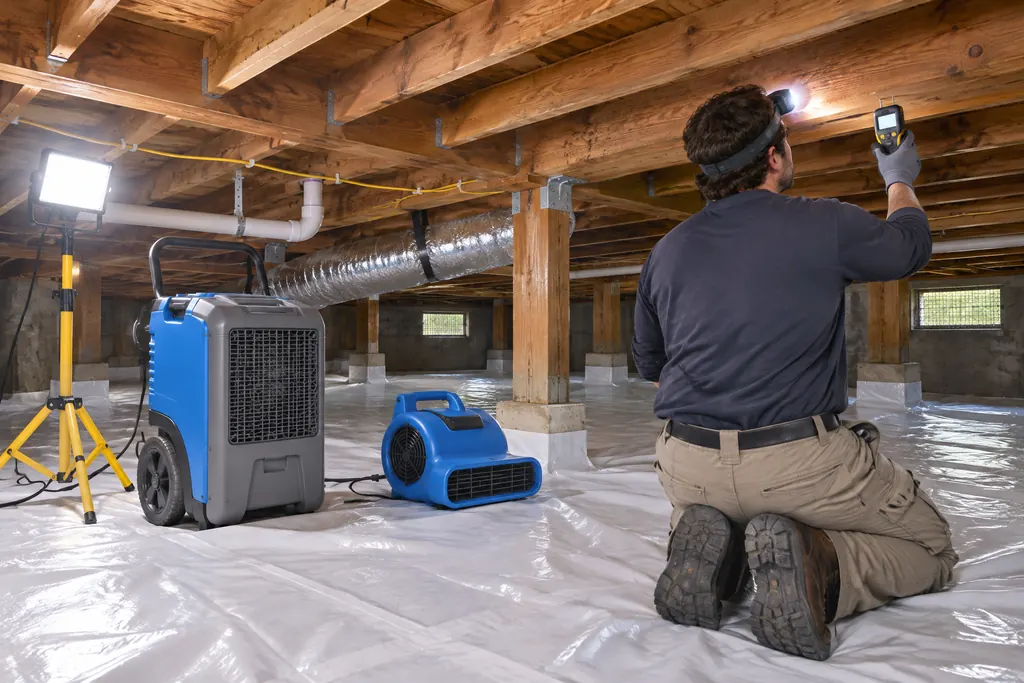
Under the house, the damage builds slowly. Fiberglass insulation between the floor joists soaks up water, sags and falls. Wet soil keeps releasing moisture into the framing for weeks after the standing water is gone. We pump out the water, remove wet insulation and debris, and dry the joists, beams and subfloor with dehumidifiers and air movers working through the access hatch. Wood moisture is measured in several spots and compared to dry framing elsewhere in the house before we call it done.
Hillside homes and lower-level rooms
On hillsides in Marin, the East Bay and the Peninsula, water moves downhill underground as well as on the surface. During a long storm, it builds up behind foundation and retaining walls and finds its way through cracks, cold joints and the gap where the slab meets the wall. Lower-level rooms built into the hill, and garages converted to living space in San Francisco and elsewhere, are where it shows up first.
Low-lying areas get water from a different direction. Neighborhoods near the San Rafael Canal and Corte Madera Creek, and along the Petaluma River, can see water rise when heavy rain coincides with high tides. Wherever it comes from, water that entered from outside is treated as black water (Category 3), because it carries soil, bacteria and whatever was on the ground. Carpet, pad and drywall it touched are removed, typically with a flood cut: a straight cut a foot or two above the water line, so the wall cavity can dry and the repair is clean. Then everything is cleaned and sanitized.
Inside water or outside water: why the source matters
Before we finalize a plan, we figure out where the water came from, because it changes the cleanup, the repair and the insurance claim. Water that shows up in dry weather, or keeps coming with the main shut off, points to plumbing: a supply line, a drain or the water heater. Water that arrives during or after rain, enters along one wall, or leaves a silt line points to drainage, groundwater or runoff.
We look at the evidence: where the water entered, its color and smell, staining on the foundation, the condition of the downspouts and the grade around the house, and whether the sump pump ran. Plumbing water from a clean line can often be dried in place if we start quickly. Outside water means more removal and sanitizing. And knowing the entry point is what lets us stop it, through a plumbing repair or through drainage and waterproofing work that keeps the water outside.
What we do, step by step
Pump out
Submersible pumps remove standing water from the basement, garage or crawl space.
Remove debris and insulation
Wet insulation, mud and damaged materials are bagged and removed.
Clean and sanitize
Areas touched by outside water are cleaned and treated before drying.
Dry the framing
Dehumidifiers and air movers dry joists, beams and subfloor, verified with wood moisture readings.
Find the entry point
We trace whether the water came from plumbing, runoff or groundwater.
Repair and prevent
New insulation and vapor barrier, framing repairs, and drainage fixes where needed.
After the cleanup, we put it back
Under the house, rebuilding means new insulation between the floor joists, repairs to any subfloor or framing that stayed wet too long, and a new vapor barrier over the soil. In a lower-level room it means drywall, flooring and trim. MM Bay does that work under the same contract as the cleanup. And because we also handle drainage and waterproofing, we can fix how the water came in before we put new materials back in its path.
Repairs & reconstruction
How insurance usually handles this
Coverage depends on where the water came from. A burst pipe or failed water heater that floods a basement is usually covered like any other sudden leak. Rainwater or groundwater coming in from outside is usually treated as flood or surface water, which standard homeowners policies exclude and a separate flood policy may cover. A sump pump that fails is often covered only with a water backup endorsement. We document the entry point and source for your adjuster.
Flooded Basement & Crawl Space: questions we hear
Still have a question? Call (415) 878-3410. We pick up 24/7.
How do you dry out a wet crawl space?
First the standing water is pumped out and wet insulation and debris are removed. Then dehumidifiers and air movers run in the crawl space, often with the vents and hatch closed so the dehumidifiers work on a contained space. We measure the moisture in the joists and subfloor daily and keep drying until they match dry framing elsewhere in the house.
Is water in my crawl space after rain normal?
Some damp soil after a big storm is common in older Bay Area homes, but standing water is not something to live with. It raises humidity under the house, wets the framing and can lead to mold and wood decay. It usually points to downspouts, grading or groundwater, all of which can be corrected.
Does homeowners insurance cover a flooded basement?
It depends on the source. Flooding from a burst pipe or failed water heater is usually covered. Water from rain, groundwater or rising surface water is usually excluded unless you have flood insurance, and sump pump failures often need a water backup endorsement. We document the source for your adjuster.
Do I need to replace insulation that got wet in the crawl space?
Usually. Fiberglass batts hold water against the framing, sag out of place and lose much of their insulating value when soaked. Insulation wet by outside floodwater is also contaminated. We remove it, dry the framing, and install new insulation once the readings confirm the joists and subfloor are dry.
Often needed together
Waterproofing & Moisture Control
Drainage, sump pumps, vapor barriers and grading that keep crawl spaces and lower levels dry through winter.
Structural Drying
Moisture mapping, dehumidifiers and daily readings until walls, floors and framing are verified dry.
Framing & Subfloor Repair
Rotted joists, subfloors, sill plates and wall framing repaired or replaced after leaks and long-term moisture.
More water damage services
Flooded Basement & Crawl Space near you
Water where it shouldn’t be? We’re ready now.
Call any time, day or night. We’ll tell you what to do right away and send a crew.