
- Home
- Services
- Repairs & Reconstruction
- Leak Source Repairs
We fix what caused the damage: plumbing, roof, electrical and HVAC repairs
MM Bay Construction & Restoration repairs the leak that caused the damage, whether it is a pipe, a roof, a shower pan or a drain line, for homes and buildings across Marin County and the Bay Area. We answer 24/7 and handle the plumbing, roofing, electrical and HVAC repairs that go with the rebuild.
- Answered 24/7
- Licensed contractor · CSLB #1071905
- We bill your insurance
- Dry-out to rebuild, one company
- 24/7, every dayPhones answered, crews sent
- Licensed & bondedCA General Building, CSLB #1071905
- Insurance billed directlyWe work with your adjuster
- We do the rebuild tooHomes, businesses, multifamily
Signs you need leak source repairs
- A leak that came back after a patch
- Water damage with no clear source
- A roof leak that shows up every rainy season
- Wiring, outlets or a furnace that got wet
- Corroded galvanized pipe or cracked cast iron drains
Plumbing repairs, from one fitting to a full repipe
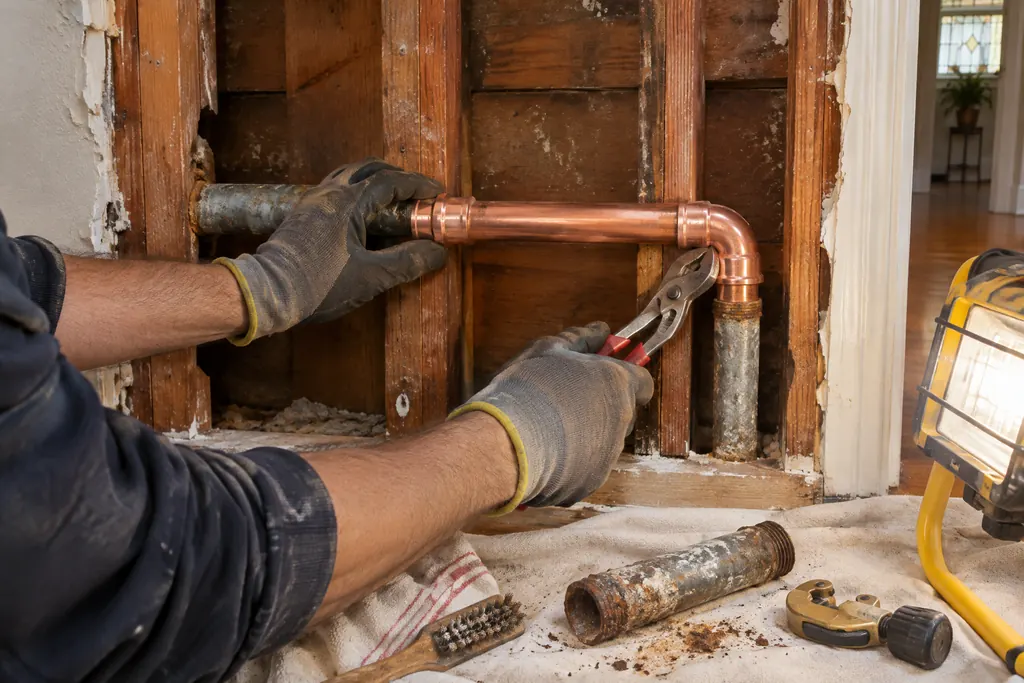
Water damage repair starts at the source, and most sources are plumbing. On the supply side, that means replacing a failed fitting, valve or supply line, replacing a corroded section of galvanized pipe, or repiping the house with copper or PEX when the whole system is near the end of its life. PEX is flexible, so it can often be snaked through attics and crawl spaces with small access openings instead of opening every wall.
Drain problems are just as common. Cast iron drains in older homes crack along the bottom, ABS fittings separate, and toilet flanges corrode until the wax seal fails. Shower pans and tub drains leak a little with every use, often into the ceiling below. We camera-inspect drains when the leak is not obvious, repair or replace the failed section, and pressure-test new supply piping before the walls close. Repipes, water heater replacements and many drain repairs require a permit, and we pull it and schedule the inspection.
Roof repairs or a new roof
Most roof leaks start at a detail, not in the middle of the roof. Flashing around chimneys, skylights, vents and where a roof meets a wall wears out or was never installed correctly. Valleys channel a lot of water and wear faster. Flat and low-slope roofs, common on San Francisco buildings and mid-century homes, leak where seams fail or where clogged drains and scuppers let water pond. We find the entry point by inspecting the roof and the framing below and, when needed, by water testing one section at a time.
Repair makes sense when the roof covering is in good shape and the problem is local: new flashing, replaced shingles, a rebuilt valley, a resealed seam. Replacement makes sense when the roof is near the end of its life and leaks are showing up in more than one place. Some hillside areas in Marin and the East Bay have stricter roofing requirements because of wildfire risk, so we check what applies to your address before material is ordered.
Electrical and HVAC after water or fire
Water and electricity are a bad combination, so wiring, outlets and panels that got wet are inspected before power is restored to them. Wiring that sat underwater is usually replaced, and outlets, switches and fixtures that got wet are typically replaced rather than dried. Opening walls in older homes also exposes knob-and-tube wiring, ungrounded circuits or undersized panels. Some of that can stay; some has to be brought up to current code once the wall is open, and that work is done under permit.
Heating and air systems take hits too. A furnace or water heater that sat in water is checked before it is relit. Ducts in a flooded crawl space are often crushed, wet or contaminated and are cleaned or replaced, and ducts after a fire usually need cleaning to stop spreading smoke residue. We handle these repairs as part of the rebuild, so the house is not only repaired but working when we leave. Ceiling leak investigations are covered on our ceiling and roof leak page.
What we do, step by step
Trace the source
Moisture mapping, inspection and testing find the actual entry point.
Temporary fix
The line is capped, the fixture shut off or the roof tarped so drying can start.
Recommend the repair
We explain the options, from a spot repair to replacement, with separate prices.
Repair under permit
Plumbing, roofing, electrical or HVAC work is done to code, with inspections when required.
Test before closing up
Pressure tests, water tests and inspections happen before any wall or ceiling is closed.
After the cleanup, we put it back
Fixing the source is part of the rebuild, not a separate project. When MM Bay handles both, the repair happens while walls and ceilings are already open, so you do not pay to open them again, and new plumbing or flashing is tested before the drywall goes up. You also have one company responsible for the whole result. When the pipe and the wall are fixed by different contractors and a leak comes back, it turns into an argument about whose work failed.
Repairs & reconstruction
How insurance usually handles this
Most homeowners policies pay for the damage a leak caused and the cost of opening walls or floors to reach it, while the failed pipe, worn roof or old water heater itself is treated as maintenance. We price the source repair as a separate line, so you can see exactly what insurance is paying for and what is yours. When code requires upgrades during the repair, ordinance or law coverage, if your policy includes it, may pay for part of that work.
Leak Source Repairs: questions we hear
Still have a question? Call (415) 878-3410. We pick up 24/7.
Does insurance pay to fix the pipe that leaked?
Usually not. Most policies cover the water damage and the cost of tearing out and replacing the wall or floor to reach the pipe, but treat the pipe itself as a maintenance item. Some policies or endorsements differ. We list the pipe repair separately on the estimate so the covered and uncovered parts are clear.
Should I repair or replace my roof after a leak?
Repair when the roof covering is in good condition overall and the leak comes from one detail, like flashing, a valley or a few damaged shingles. Replace when the roof is near the end of its life, leaks in several places, or the damage covers a large area. We inspect it and give you both options when both are reasonable.
Do I need an electrician after water damage?
If water reached outlets, switches, wiring, fixtures or the electrical panel, those need to be inspected before the power is turned back on in that area. Submerged wiring and wet devices are usually replaced. We handle the electrical repairs that are part of the rebuild, with permits and inspections when required.
Can you repipe a house without tearing out every wall?
Usually. PEX tubing is flexible enough to route through attics, crawl spaces and inside walls through small openings at fixtures and key points. Those openings are patched, textured and painted afterward. If walls are already open for drying, we use those openings and avoid new ones.
Often needed together
Burst Pipe Cleanup
Cleanup and drying after burst pipes, pinhole leaks and slab leaks, plus the pipe repair and rebuild.
Ceiling & Roof Leak Damage
Sagging or stained ceilings from roof leaks and upstairs bathrooms, dried, repaired and fixed at the source.
Water Damage Repair
The full rebuild after a leak or flood: drywall, floors, cabinets, paint and trim, under one licensed contractor.
More reconstruction services
Water where it shouldn’t be? We’re ready now.
Call any time, day or night. We’ll tell you what to do right away and send a crew.