
- Home
- Services
- Water Damage Restoration
- Sewage Backup Cleanup
Sewage backup and toilet overflow cleanup in the Bay Area
MM Bay Construction & Restoration cleans up sewage backups and toilet overflows in homes and buildings across Marin County and the Bay Area, 24/7. We remove the contaminated materials, clean and sanitize the area, dry it, and rebuild it under our general contractor license.
- Answered 24/7
- Licensed contractor · CSLB #1071905
- We bill your insurance
- Dry-out to rebuild, one company
- 24/7, every dayPhones answered, crews sent
- Licensed & bondedCA General Building, CSLB #1071905
- Insurance billed directlyWe work with your adjuster
- We do the rebuild tooHomes, businesses, multifamily
Signs you need sewage backup cleanup
- Sewage coming up through a floor drain, shower or tub
- A toilet overflow that reached flooring or the room below
- Gurgling drains, or several fixtures backing up at once
- A sewer smell in a basement, garage or crawl space
- Backups that happen during heavy rain
Why sewage cleanup is handled differently
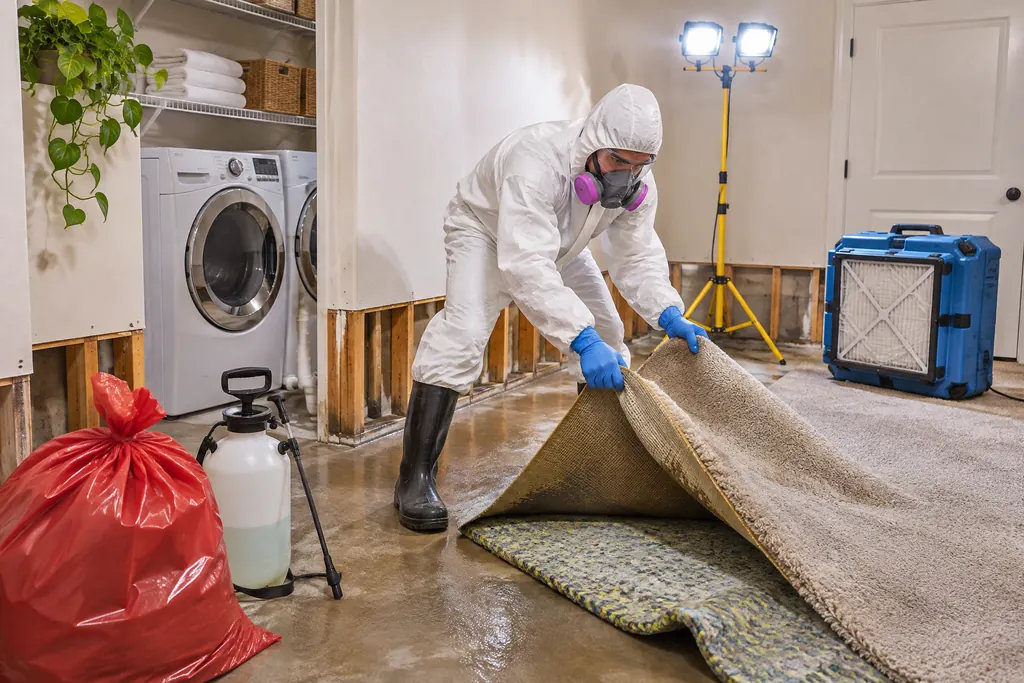
Sewage is black water (Category 3) under the IICRC S500 standard, which means it can carry bacteria, viruses and other contaminants. The cleanup is built around that. Our crew works in protective gear, the area is closed off from the rest of the home, and the order of work changes: contaminated materials come out before drying starts, not after.
Porous materials that sewage touched, like drywall, insulation, carpet and pad, and upholstered furniture that sat in it, are removed and bagged, because they cannot be reliably cleaned. Drywall is cut well above the highest point the water reached. Hard surfaces such as tile, concrete, sealed wood framing and metal are cleaned and disinfected. Then the area is dried and monitored like any other water loss.
Not every toilet overflow is the same. Clean water from a running tank is very different from a bowl overflow with waste. We treat the overflow according to what was in the water, which keeps the removal to what is actually necessary.
What causes sewer backups in older Bay Area homes
Most backups start in the sewer lateral, the private pipe that carries waste from your house to the public main. In older Bay Area neighborhoods, laterals are often clay or cast iron. Clay joints let tree roots in, cast iron cracks and scales, and sections settle into low spots where waste collects. Grease and wipes finish the job. Heavy winter rain adds another cause: when storm water leaks into aging sewer systems, mains can surcharge and push sewage back toward the lowest drains, which is why basement bathrooms and floor drains overflow first.
After the cleanup we can arrange a camera inspection of the lateral and repair or replace damaged sections, and install a backwater valve that lets waste flow out but closes when it tries to come back. In parts of the East Bay this matters at sale time too: Alameda, Albany, Emeryville, Oakland, Piedmont and the Stege Sanitary District area, which includes El Cerrito and Kensington, fall under EBMUD's private sewer lateral program, which requires a compliance certificate when you sell, do building or remodel work over $100,000, or change your water meter size.
Keeping the rest of your home clean during the work
The goal is to keep contamination where it already is. We seal the work area with plastic sheeting and zipper doors, shut down heating and cooling to that zone so the ductwork does not carry odors and particles to other rooms, and set up air scrubbers. Children and pets should stay out of the area until cleaning is complete, and we lay protective runners on the path the crew uses through the house.
Your belongings are sorted as we go. Hard items like dishes, metal furniture and plastic storage bins can usually be cleaned and disinfected. Soft, porous items that sat in sewage, like rugs, mattresses, cardboard boxes and clothing that cannot be laundered at high heat, are usually discarded. We photograph and list everything before it leaves, so nothing is lost from your contents claim. When the cleaning and drying are done, we do a final inspection of every surface in the work area before the containment comes down.
What we do, step by step
Isolate the area
Containment goes up, HVAC to the area is shut down, and air scrubbers start running.
Remove the sewage
Standing sewage and water are pumped and extracted for proper disposal.
Remove contaminated materials
Drywall, insulation, carpet and pad that sewage touched are cut out, bagged and photographed.
Clean and disinfect
Framing, floors and hard surfaces are cleaned and treated with disinfectant.
Dry and verify
Dehumidifiers dry the structure, confirmed with daily moisture readings.
Fix the line and rebuild
Lateral repairs or a backwater valve if needed, then drywall, flooring and finishes.
After the cleanup, we put it back
After a sewage backup, more comes out of the room than after a clean water leak, so more goes back in: drywall up to a set height above the water line, insulation, baseboards, flooring and sometimes a vanity or toilet. MM Bay plans the removal with the rebuild in mind, keeping cuts level so the new drywall goes in cleanly. We can also replace the cracked lateral or add a backwater valve as part of the same project, so the repair and the prevention happen together.
Repairs & reconstruction
How insurance usually handles this
Standard homeowners policies often exclude sewer and drain backup unless a water backup endorsement was added, and that endorsement appears on your declarations page with its own limit. A toilet that overflowed because of a failed fill valve may be handled differently from a backup out of the main. Commercial and HOA policies vary. We record the source, photograph the affected areas and keep a list of removed materials and contents, which is what your adjuster needs either way.
Sewage Backup Cleanup: questions we hear
Still have a question? Call (415) 878-3410. We pick up 24/7.
Is sewage backup cleanup covered by homeowners insurance?
Often only if your policy includes a water backup or sewer backup endorsement. Without it, many standard policies exclude water that backs up through drains or sewers. A toilet overflow caused by a plumbing failure inside the home can be treated differently. We document the source and the damage for your adjuster and can bill your insurer directly for covered work.
Can carpet be saved after a sewage backup?
Generally not. Industry standards call for carpet and pad touched by sewage to be removed and discarded, because the contamination soaks into the fibers and backing and cannot be reliably cleaned out. Hard flooring such as tile, sealed concrete and some sealed wood can usually be cleaned, disinfected and kept, depending on how long the sewage sat.
Who is responsible for a sewer backup, me or the city?
In most Bay Area cities, the property owner is responsible for the sewer lateral from the house to the public main, though exactly where that responsibility ends varies by city or sanitary district. If the backup came from a blocked public main, the agency may be responsible. Claims against a California public agency generally must be filed within six months.
How long after a sewage backup can I use the room again?
Once the contaminated materials are removed, the area is cleaned and disinfected, and the structure is dry, the room can be rebuilt and used. Cleaning and drying often take several days, and rebuilding follows. Areas outside the containment can usually be used throughout the work.
Often needed together
Emergency Water Removal
Pump-out and extraction of standing water, day or night, with drying started on the first visit.
Leak Source Repairs
Pipe, drain, roof and shower repairs, plus electrical and HVAC work tied to the rebuild, so it does not happen again.
Water Damage Repair
The full rebuild after a leak or flood: drywall, floors, cabinets, paint and trim, under one licensed contractor.
More water damage services
Water where it shouldn’t be? We’re ready now.
Call any time, day or night. We’ll tell you what to do right away and send a crew.