
- Home
- Services
- Water Damage Restoration
- Emergency Water Removal
24/7 emergency water removal and extraction in the Bay Area
MM Bay Construction & Restoration answers 24/7 and sends a crew to pump out standing water, extract it from carpet and floors, and start drying, anywhere in Marin County and the Bay Area. Call (415) 878-3410 and we will help you shut off the water while the crew is on the way.
- Answered 24/7
- Licensed contractor · CSLB #1071905
- We bill your insurance
- Dry-out to rebuild, one company
- 24/7, every dayPhones answered, crews sent
- Licensed & bondedCA General Building, CSLB #1071905
- Insurance billed directlyWe work with your adjuster
- We do the rebuild tooHomes, businesses, multifamily
Signs you need emergency water removal
- Water pooled on floors or soaking into carpet
- A flooded basement, garage or lower level
- Water still running from a pipe or fixture you cannot shut off
- Water coming through light fixtures or ceiling vents
- Water spreading into a neighbor's unit or the floor below
What happens when you call at 2 AM
When you call, we answer and ask a few quick questions. Where is the water coming from, and is it still running? Is it clean water from a pipe, or does it smell like sewage? Has it reached outlets, cords or the electrical panel? How many rooms, and is there a floor below? Those answers tell the crew what to load and how many people to send.
While they drive, we help you stop the flow. In most houses the main shutoff is where the water line enters the building, often at the front near a hose bib or in the garage, or at the meter box by the street. In condos and apartment buildings it may be a valve inside your unit or one the building manager controls. If water is near outlets or the panel, the best thing to do is stay out of that area. When the crew arrives, the first job is safety: we confirm the water is off and check whether any wet circuits need to be shut off at the panel before anyone starts working.
Extraction removes far more water than drying ever will
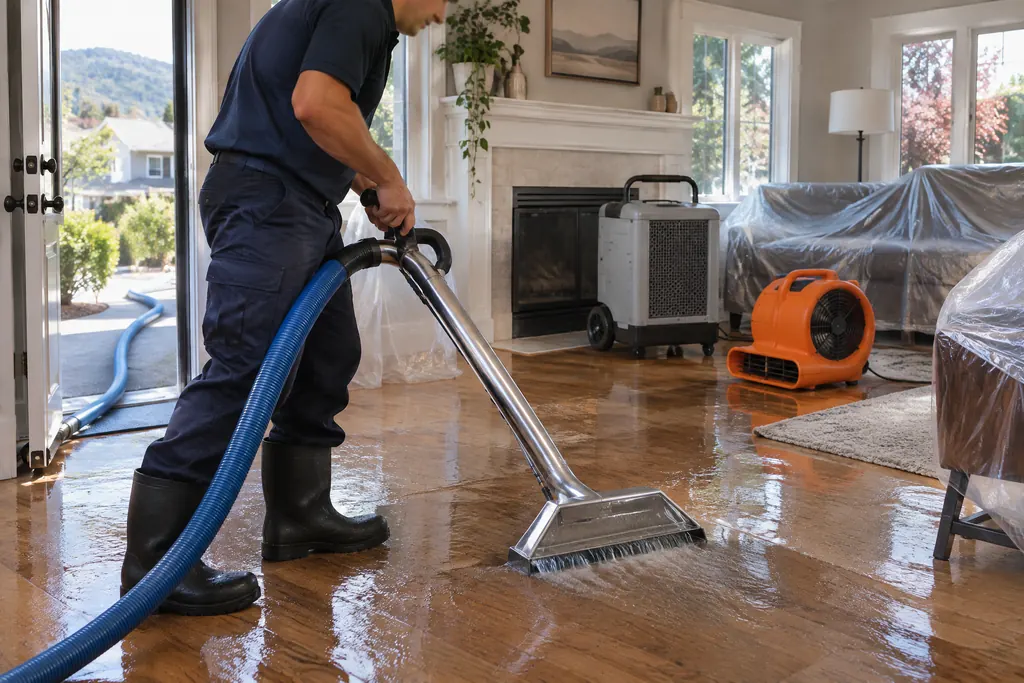
Every gallon we extract as liquid is a gallon the dehumidifiers do not have to pull out of the air later, so extraction is the fastest and least expensive part of the job. For deep water we start with submersible pumps. Once the depth is down, we switch to extraction units with wands and weighted tools that press down on carpet and pull water out of the pad underneath. On hard floors we use squeegee tools and specialty extraction heads that can lift water from the seams between boards.
Carpet pad acts like a sponge and is inexpensive to replace, so it usually comes out even when the carpet itself can be dried and kept. Wet baseboards get pulled so air can reach the bottom of the wall. Furniture is moved or lifted onto blocks and foam pads so it stops soaking up water. Only when the standing water is gone do we set up dehumidifiers and air movers, sized to the rooms and the amount of wet material.
When the water is deep, dirty or under the house
More than an inch or two of water changes the approach. Gas appliances like a water heater or furnace that sat in water need to be checked before they are used again, and anything plugged in near the floor is treated as a hazard until the power is confirmed off. Water that came from outside, like storm runoff flowing into a garage or a lower-level room, is treated as black water (Category 3) because it carries soil and bacteria. That means wet drywall, insulation, carpet and pad are removed rather than dried, and the area is cleaned and sanitized.
Many Bay Area homes sit on raised foundations, so water on the main floor often keeps going into the crawl space below. We check under the house on every job where water reached the floor and pump it out if it collected there; our basement and crawl space page covers that work. In San Francisco flats and multi-unit buildings, we also check the ceiling of the unit below.
What we do, step by step
Answer and plan
We answer 24/7, learn the source, the water type and how far it spread, and help you shut off the supply.
Make it safe
On arrival we confirm the water is off and check for electrical hazards and wet gas appliances.
Pump and extract
Submersible pumps for deep water, then extraction units for carpet, pad and hard floors.
Remove what cannot be saved
Wet pad, baseboards and contaminated materials come out; furniture is moved or blocked up.
Document and start drying
Photos, moisture readings and a drying plan, with dehumidifiers and air movers set the same visit.
After the cleanup, we put it back
Every decision during extraction affects the rebuild. When we pull baseboards, we label the ones that can be reused so they go back where they came from. When a wall has to be opened, we cut at a consistent height that leaves a straight repair line instead of a ragged hole. MM Bay is the licensed contractor who will hang the new drywall and lay the new floor, so we have every reason to remove only what the readings call for, and there is no hand-off to another company when the drying is done.
Repairs & reconstruction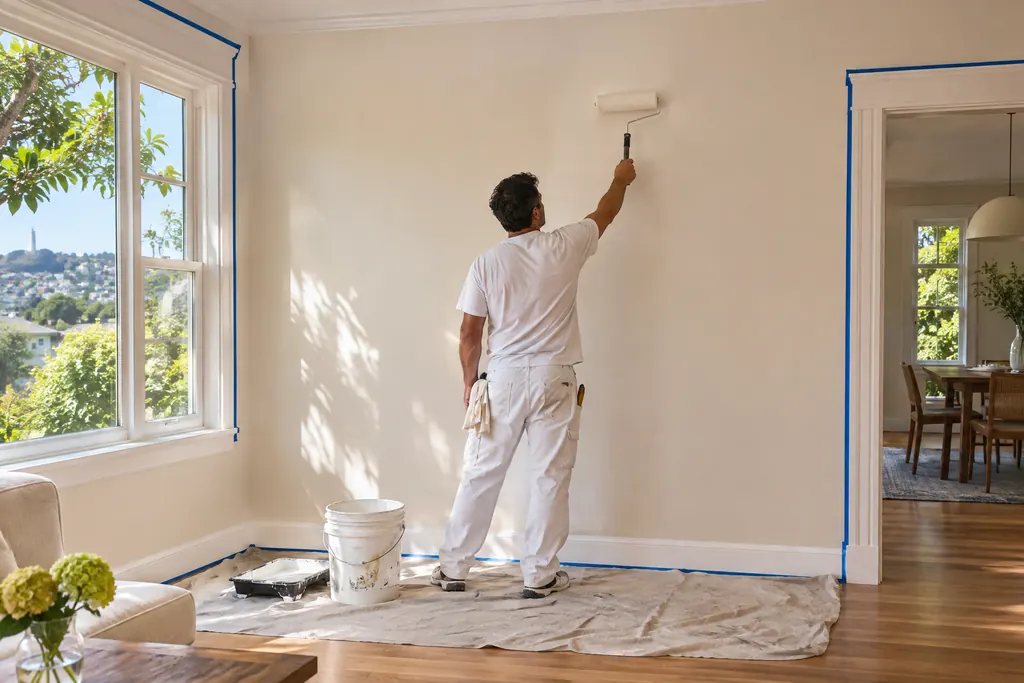
How insurance usually handles this
There is no need to wait for the insurance company before we start. Policies expect you to take reasonable steps to prevent further damage, and emergency water removal is exactly that. We photograph the water before we extract it, record where it came from and how far it spread, and keep any failed part, like a burst supply line, because adjusters often ask to see it. That record goes to your adjuster, and we can bill the insurance company directly.
Emergency Water Removal: questions we hear
Still have a question? Call (415) 878-3410. We pick up 24/7.
How fast should standing water be removed?
As soon as possible. Drywall starts wicking water up within hours, wood floors begin to swell, and the EPA recommends drying water-damaged materials within 24 to 48 hours to prevent mold. Clean water can also turn into gray water as it sits. That is why we answer 24/7 and send a crew right away instead of scheduling the next business day.
Can I use a shop vac to remove water from my house?
A shop vac works for a small spill on a hard floor. It cannot pull water out of carpet pad, subfloor or wall cavities, and running one near standing water and outlets is an electrical risk. For anything beyond a small area, professional extraction removes far more water, and moisture readings show where the hidden water went.
Is emergency water removal covered by insurance?
When the water comes from a covered cause, like a burst pipe or a failed water heater, emergency extraction and drying are usually part of the claim. Most policies expect you to act quickly to limit damage, so waiting for an adjuster to visit first is rarely required. Outside floodwater is the main exception and needs a separate flood policy.
What should I do while I wait for the water removal crew?
Nothing beyond staying safe is required. If you can do it easily, shut off the water, keep out of rooms where water has reached outlets, and move small valuables, photos and rugs to a dry spot. A few phone photos of the water before we arrive help your claim. We handle the rest when the crew gets there.
Often needed together
Structural Drying
Moisture mapping, dehumidifiers and daily readings until walls, floors and framing are verified dry.
Burst Pipe Cleanup
Cleanup and drying after burst pipes, pinhole leaks and slab leaks, plus the pipe repair and rebuild.
Water Damage Repair
The full rebuild after a leak or flood: drywall, floors, cabinets, paint and trim, under one licensed contractor.
More water damage services
Water where it shouldn’t be? We’re ready now.
Call any time, day or night. We’ll tell you what to do right away and send a crew.