
- Home
- Services
- Mold Remediation
- Mold Inspection & Testing
Mold inspection and testing in Marin County and the Bay Area
MM Bay Construction & Restoration inspects homes and buildings for mold and the moisture behind it across Marin County and the Bay Area, and we coordinate lab testing when it will answer a real question. We answer 24/7, and if mold is found, we can remove it, fix the cause and rebuild the area.
- Answered 24/7
- Licensed contractor · CSLB #1071905
- We bill your insurance
- Dry-out to rebuild, one company
- 24/7, every dayPhones answered, crews sent
- Licensed & bondedCA General Building, CSLB #1071905
- Insurance billed directlyWe work with your adjuster
- We do the rebuild tooHomes, businesses, multifamily
Signs you need mold inspection & testing
- A musty smell with no visible growth
- Spots on walls, ceilings or window frames
- A past leak that was never opened up
- Mold noted in a home inspection before a sale
- You need proof that remediation worked
What a mold inspection looks for
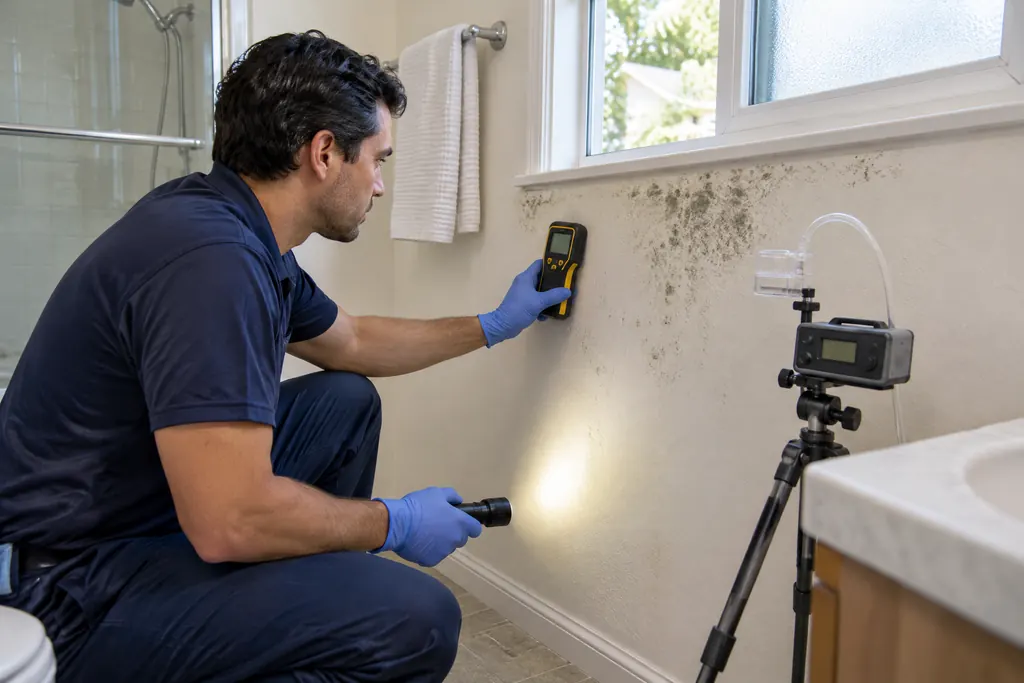
Mold always follows water, so a good inspection is as much a moisture investigation as a search for mold. We start with what you have noticed: where the smell is strongest, when it gets worse, any past leaks or storms. Then we look. That means a visual inspection of the affected rooms, closets, under sinks and behind appliances, plus the attic and crawl space, where a lot of hidden growth lives.
We measure moisture in walls, floors and ceilings with meters, scan with a thermal camera for cool, damp areas, and check humidity in the air. If readings point to a wet wall cavity, a small inspection opening may be justified to look inside, and we explain why before we cut. The result is a plain-language summary: where mold is present, roughly how large the affected area is, what moisture caused it, and what it would take to remove it and stop it from returning. That summary is what you, a buyer, a landlord or an adjuster can actually use.
When mold testing helps, and when it does not
Testing is useful, but it is not always needed. EPA guidance notes that when mold growth is visible, sampling is usually unnecessary to decide that it should be removed. There are also no federal limits for mold or mold spores, so a lab report alone does not say whether a home passes or fails.
Testing earns its cost in specific situations. When there is a musty smell but no visible growth, air samples compared against an outdoor sample can show whether something indoors is producing spores. Surface samples, taken with tape or a swab, can confirm whether a stain is mold. Testing is often requested for real estate transactions, landlord and tenant situations, and when a doctor has asked about a home's conditions. And clearance testing after remediation gives independent evidence that the work achieved its goal. Samples are analyzed by an accredited laboratory, and the results are read in context: compared with outdoor air and with the inspection findings, not on their own.
Independent testing and clearance
For clearance after removal, many homeowners, buyers and insurers prefer testing by an independent assessor or industrial hygienist, someone who did not do the remediation and has no stake in the result. We think that is a sensible approach, and we coordinate it. We schedule the assessor's visit for the end of the job, while the containment is still up, so if the results show more cleaning is needed, it can happen inside the containment before anything is rebuilt.
We are clear about our role. MM Bay is a licensed contractor: we find moisture, remove mold, fix what caused it and rebuild. We do not interpret what a lab result means for anyone's health, and we do not overstate what testing can prove. When the work is complete, you get the moisture readings, photos of each stage, and the independent results if you chose testing. The remediation itself is described on our mold remediation page.
What we do, step by step
Talk it through
We learn what you have noticed, when, and any history of leaks or storms.
Inspect and measure
Visual inspection plus moisture meters, thermal imaging and humidity readings.
Decide on testing
We explain whether sampling would answer a real question, and which kind.
Collect or coordinate samples
Samples go to an accredited lab, or an independent assessor takes them.
Review and scope
Findings, moisture source and a removal plan in plain language.
Clearance after removal
Final inspection and readings, with independent clearance testing when you want it.
After the cleanup, we put it back
An inspection is only useful if it leads somewhere. When MM Bay finds mold, the same findings become the plan: where the containment goes, which drywall and insulation come out, what fixes the moisture, and what gets rebuilt. Because we are also the contractor who can do the removal and the rebuild, our inspection is written in the measurements and materials a repair needs. You are not left holding a lab report and a list of companies to call.
Repairs & reconstruction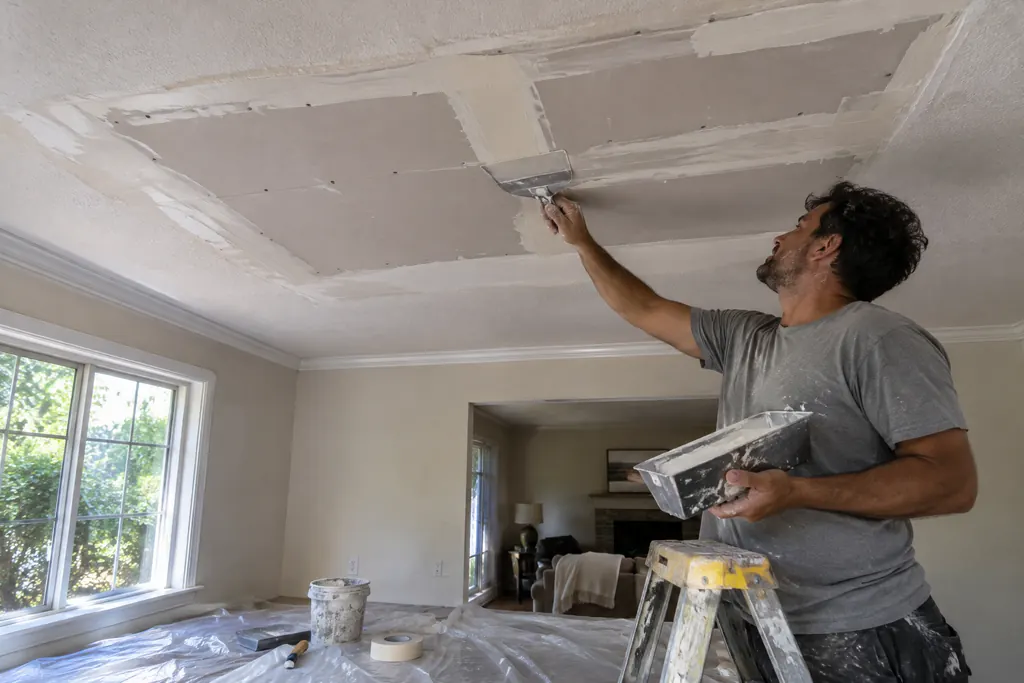
How insurance usually handles this
Insurers generally do not pay for an inspection on its own unless it is tied to a covered loss. If the mold is the result of a covered water event, like a burst pipe or an appliance failure, the testing needed to scope and clear the remediation can be part of that claim, though many policies limit how much they pay toward mold. We document the moisture source first, since that is the first thing your adjuster will ask about.
Mold Inspection & Testing: questions we hear
Still have a question? Call (415) 878-3410. We pick up 24/7.
Do I need a mold test if I can see mold?
Usually not. EPA guidance says that when mold is visible, sampling is generally unnecessary to decide it should be removed. Testing makes more sense when you smell mold but cannot find it, when a buyer, landlord or doctor asks for it, or after remediation to confirm the work met its goal.
What does a musty smell in my house mean?
A musty smell usually means something is damp and mold or bacteria are growing on it, often somewhere you cannot see: inside a wall, under a sink, in the crawl space or in ductwork. The smell alone does not tell you how much or where. An inspection with moisture readings finds the source.
Who should do mold clearance testing?
Ideally an independent assessor or industrial hygienist who did not perform the remediation, so the result is unbiased. Many homeowners, buyers and insurers prefer it that way. We coordinate the testing and keep containment in place until the results are back.
Can mold grow inside walls without being visible?
It can. A slow plumbing leak, a failed shower pan, a window leak or condensation in a cold exterior wall can keep the inside of a wall damp long enough for mold to grow on the back of the drywall and the framing. A musty smell, staining, bubbling paint or high moisture readings are the usual clues.
Often needed together
Structural Drying
Moisture mapping, dehumidifiers and daily readings until walls, floors and framing are verified dry.
Flooded Basement & Crawl Space
Pump-out, cleanup and drying for flooded basements, lower levels and crawl spaces under raised foundations.
Waterproofing & Moisture Control
Drainage, sump pumps, vapor barriers and grading that keep crawl spaces and lower levels dry through winter.
Water where it shouldn’t be? We’re ready now.
Call any time, day or night. We’ll tell you what to do right away and send a crew.