
- Home
- Services
- Repairs & Reconstruction
- Painting & Finish Carpentry
Interior painting, trim and finish carpentry after water or fire damage
MM Bay Construction & Restoration handles the interior painting, baseboards, trim, doors and finish carpentry that make repairs disappear, for homes and buildings across Marin County and the Bay Area. We answer 24/7, and finish work is the final step of every rebuild we do.
- Answered 24/7
- Licensed contractor · CSLB #1071905
- We bill your insurance
- Dry-out to rebuild, one company
- 24/7, every dayPhones answered, crews sent
- Licensed & bondedCA General Building, CSLB #1071905
- Insurance billed directlyWe work with your adjuster
- We do the rebuild tooHomes, businesses, multifamily
Signs you need painting & finish carpentry
- Swollen baseboards or door casings after a leak
- A repaired wall that still shows patch lines
- Stains bleeding through fresh paint
- Doors that swelled and no longer close
- Trim or built-ins removed during cleanup
Why repaired walls still show
A wall can be repaired perfectly and still look patched. Usually the cause is one of four things. The texture does not quite match. The sheen is different, like eggshell next to flat. The paint was touched up over the patch instead of applied to the whole wall. Or the existing paint has faded, so even the right color from the can looks brighter.
We work through each one. We match color by taking a chip of your existing paint, often from inside a closet or behind a switch plate, and having it scanned and mixed, so the match reflects the paint as it looks today. We match the sheen. We paint whole walls and ceilings corner to corner, so any small color difference falls at an inside corner where the eye accepts it. Water stains and smoke residue bleed through ordinary latex paint, so those areas get a stain-blocking primer first, typically oil-based or shellac-based. Then the room gets two coats of finish paint.
Matching trim in older Bay Area homes
Victorian and Edwardian homes in San Francisco and older Marin and East Bay neighborhoods often have baseboards, casings and crown moldings in profiles that lumber yards stopped stocking decades ago, frequently milled from old-growth redwood or fir. A stock baseboard from the store will not match them, and a mismatch along one wall is easy to spot.
We have three ways to handle it. First, salvage: during mitigation we remove original trim carefully, label each piece by location, dry it and reinstall it. Second, custom milling: a millwork shop can grind a knife to match your profile and run new trim in a matching wood. Third, built-up profiles: combining stock pieces to recreate a larger molding. Mid-century homes are usually simpler, with flat or lightly eased trim that is easy to match. Built-ins, wainscoting, picture rails and plate rails get the same care, because in an older home they are part of what you are paying to restore.
Doors, casings and the details at the end
Water does a lot to doors. A solid wood door that swelled may close again once it dries, sometimes with a little planing and refinishing of the edge. Hollow-core doors with a veneer face often delaminate and are replaced. When a door is replaced, the new one has to match the old in style, thickness, hinge location and bore, especially when it is one of several matching doors down a hallway.
Then come the details that separate a finished room from an almost-finished one. Casings are reset with tight miters. Nail holes are filled and sanded flush. Gaps between trim and wall are caulked before the final coat. Door hardware, switch plates, outlet covers, cabinet pulls and closet rods go back in their places. Finally we do a punch-list walkthrough with you, room by room, and fix anything that catches your eye. Some of our finish work follows drywall repairs, described on the drywall and ceiling repair page.
What we do, step by step
Prep
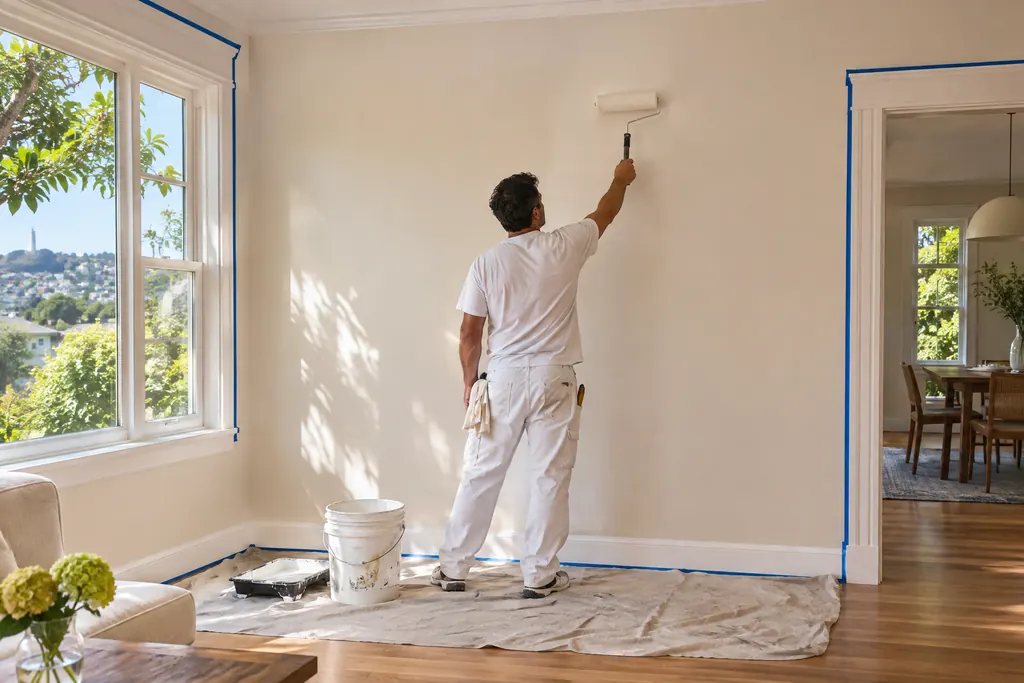
Surfaces are cleaned, sanded and masked, and floors and fixtures are protected.
Prime
Stain-blocking primer over water or smoke stains, and primer on all new drywall.
Paint
Matched color and sheen on full walls and ceilings, two finish coats.
Install trim
Salvaged, milled or stock trim installed with tight joints, filled and caulked.
Fit doors
Doors planed, rehung or replaced and matched to the rest of the house.
Punch list
A room-by-room walkthrough with you, and every item fixed.
After the cleanup, we put it back
Finish work is where you can tell whether one company really ran the job. If the drywall crew left a ridge, or the flooring crew set the floor too high for the old baseboard, the painter or carpenter inherits the problem. At MM Bay the same team planned the drywall, the floor height and the trim from the start, so the finish carpentry fits and the paint goes on over a surface we prepared ourselves. You get a finished room, not a room that is mostly done.
Repairs & reconstruction
How insurance usually handles this
Paint and trim are often underestimated on a claim. A common gap is an estimate that covers painting only the repaired section, which leaves a visible patch, or one that leaves out the stain-blocking primer needed over water or smoke stains. We scope painting to the full wall or ceiling, list primer as its own step, and note trim that cannot be matched with stock profiles, with photos, so your adjuster can see why each line is there.
Painting & Finish Carpentry: questions we hear
Still have a question? Call (415) 878-3410. We pick up 24/7.
Can you match my existing paint color?
Usually very closely. We take a small chip of the existing paint from an inconspicuous spot and have it scanned and mixed, which matches the color as it looks now, including fading. We also match the sheen, and we paint full walls corner to corner so any slight difference is hidden at a corner.
Why does a water stain come back after painting?
Water carries minerals and tannins from drywall, wood and dust to the surface, and those bleed through ordinary latex paint. The fix is to confirm the area is completely dry, seal the stain with a stain-blocking primer, often oil-based or shellac-based, then repaint. If the stain spreads again later, the leak is still active.
Do you replace baseboards after water damage?
Swollen, delaminated or contaminated baseboards are replaced. MDF baseboards swell and do not recover, so they are replaced. Solid wood baseboards can often be dried and reinstalled, which matters in older homes with profiles that are no longer made. We remove them carefully, label each piece and decide based on condition.
Can swollen doors be fixed after a leak?
Solid wood doors often shrink back as they dry and may only need the edge planed and refinished to close properly. Hollow-core and veneered doors frequently delaminate and are replaced. Door frames and casings that sat in water are checked and replaced if they swelled or stayed damp.
Often needed together
Drywall & Ceiling Repair
New drywall and ceilings with matched popcorn, knockdown, orange peel or smooth finish, plus insulation.
Smoke, Soot & Odor Removal
Soot cleanup, smoke odor removal, and the sealing and repainting that keep the smell from coming back.
Water Damage Repair
The full rebuild after a leak or flood: drywall, floors, cabinets, paint and trim, under one licensed contractor.
More reconstruction services
Water where it shouldn’t be? We’re ready now.
Call any time, day or night. We’ll tell you what to do right away and send a crew.